


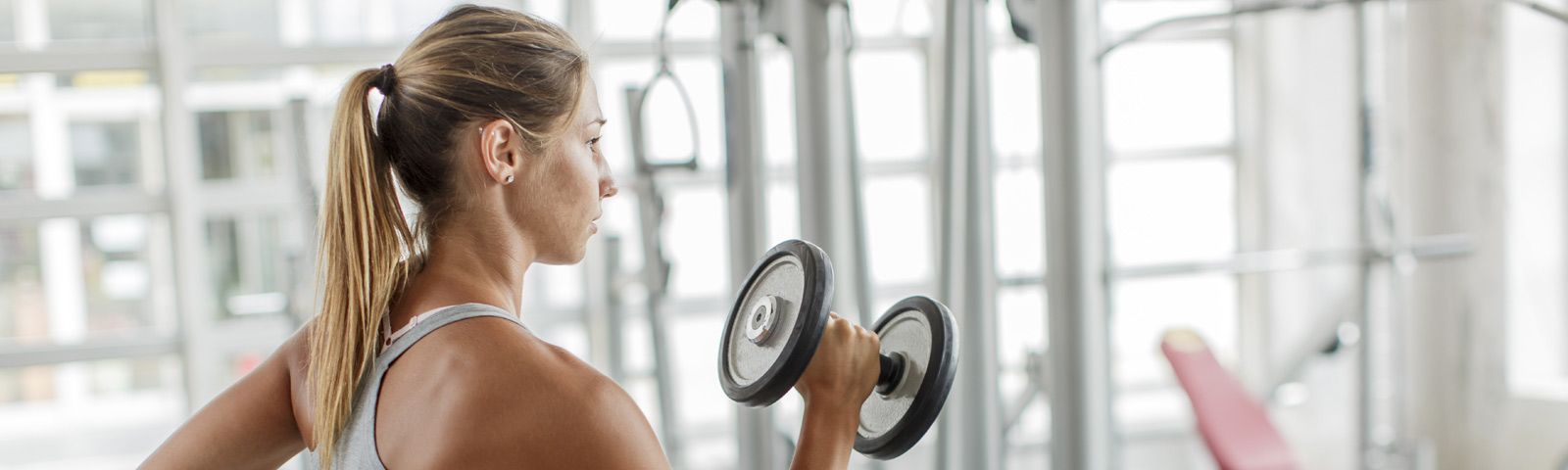
Six-Pack Trend Raises Concerns
Recently, news articles have reported that various dietitians and health organizations are raising concerns about the growing obsession with having “six-pack abs.” But why is this happening?
Experts are particularly worried about young women who are heavily influenced by social media and blogs promoting a so-called “healthy lifestyle” centered around achieving a six-pack.
On platforms like Instagram, it’s become increasingly common to be bombarded with images of both men — but especially women — flaunting toned abs.
These so-called “fitspiration” photos are causing many women to start dieting and working out obsessively.
“You can see a trend where the beauty ideal for women is shifting from thin to muscular,” says Scarlet Hemkesfrom Proud2bme, a website for people with eating disorders.
Of course, there’s nothing wrong with exercising — but it becomes concerning when women are spending every day at the gym chasing the “perfect” body.
“It makes you wonder if what many young women are doing is even healthy anymore,” Scarlet adds.
Extreme diets & exercise routines
Along with drastic changes to their workout routines, many women also adopt extreme dietary restrictions.
Key food groups like dairy, grains, and gluten are often eliminated from daily meals and replaced with trendy green smoothies and salads.
According to Professor Eric van Furth, this is an unhealthy and unsustainable situation.
A growing concern for experts
While men have long been focused on building lean, muscular physiques, the fact that women are now joining this trend isn’t necessarily bad — but it does concern experts like Professor van Furth, a specialist in eating disorders at Leiden University.
His main worry is that the trend is increasingly focused on achieving an extremely low body fat percentage — a state where the body can eventually enter a catabolic (breakdown) state.
Genetics matter — but many women don’t know
Many women are unaware that achieving a six-pack is not only extremely time-consuming and difficult — it also largely depends on genetics.
Esther van Etten, a member of the Dutch Association of Dietitians, sees this in her Amsterdam practice every day.
She often explains to young women that a six-pack is not easily achievable — and in many cases, not realistic.
Like Scarlet, she’s concerned about women who want a six-pack and a “shredded” physique (very low body fat).
For women, maintaining very low body fat is simply not natural.
Women naturally carry more fat in certain areas of the body, and their fat percentage will always be higher than men’s.
Social media, however, presents a perfected version of reality — one that simply isn’t true, and this is something we need to warn against.
What will this trend lead to?
Eric van Furth says it’s difficult to predict how the growing gap between reality and social ideals will affect people in the long term.
In recent years, there has been much greater public focus on obesity and women’s health — which may partly explain the rise in the desire to become more muscular.
For now, it appears to be a hype.
Whether it turns out to be a lasting trend or just a temporary phase — only time will tell.